• 0 Posts
  • 21 Comments
Joined 3 months ago
cake
Cake day: June 8th, 2026

help-circle
  • Hah, I distinctly remember the first time I discovered the pressure sensitivity in MGS 3. I was hiding inside of a locker, and pressed a button to lean towards the grate and peek out. I lightly pressed it, and Snake barely leaned at all. I couldn’t really see what I needed to. So I mashed it harder. But I pressed it so hard that Snake slammed his face into the metal locker door with an audible thud. The noise alerted the guard and I was caught.

    The fact that they even thought to program in a “slam face into whatever you’re peeking out of” mechanic has me rolling now that I’m thinking about it. It really is peak Kojima.


  • While I agree, the way the article is worded makes me suspect that is the name of the crime they’re accused of.

    Sort of like how Trump was found liable for “sexual abuse”, because the jurisdiction it occurred in strictly defines rape as penis-in-vagina sex. And since he “only” (ugh) used his fingers, it wasn’t technically rape as far as the law was concerned. But the judge who oversaw the case later had to clarify that it would colloquially be referred to as rape, even though that wasn’t the technical term that the lawsuit used. Because Trump was trying to use the “well I wasn’t found liable for rape, so she can’t say I raped her” argument in his defamation lawsuit.


  • Oh, I agree. My point was simply that if a restaurant is trying to ditch the “mom and pop” vibes and get professional photos for their menus, it’s not something that is done on a whim. It’s not just a “snap a pic with your phone and post it on your menu” type of thing if a restaurant is trying to look like more than a family owned joint.

    And that’s before we even get into the actual menu design, because a well-formatted menu is designed to draw customers towards the most profitable items. All of those highlighted and “chefs special” menu choices that are in big bold bright letters in the center of the menu, with accompanying pictures? Yeah, the restaurant has done the math on the raw ingredients and prep time for each menu item, and those featured choices are the items that are most profitable for the restaurant to make. The goal is to encourage people to buy the things that make the most money. Those small menu options that are tucked away in the bottom of the menu like a footnote? Those are the least profitable. A good menu layout can increase dine-in profits by upwards of 10-20%, simply by encouraging people to order the most profitable items.

    And while I don’t agree with using AI for the food images, I can see how a restaurant manager would balk at a $10k professional food photographer bill. Especially when that also requires closing the restaurant for a day, (meaning a day of lost profits) so the photographer can work with the cook staff for the photos during a dedicated photography session. Why would they eat that massive cost, when they could generate a “good enough” (meaning the majority of people won’t notice or care that it is AI) image for free in a few minutes? Again, I don’t agree with it, but I can see why a restaurant manager would see it as an attractive alternative.


  • I used Google Timeline to prove I was at work one time. This was back when I was freelancing. My client tried to say I was stealing time, because I had an off-site meeting that ran long. They were threatening to withhold a few hours of pay, even though I was at the worksite the entire time. I pulled up my timeline and used it to prove that I was, in fact, at the meeting site for an extra few hours. Being able to de-Google that functionality has a lot of value to certain people.


  • Food photography is actually an entire branch of photography, and a lot of the photos you have historically seen haven’t been real edible food. For example, the milk in the bowl of cereal on your cereal box? That’s usually white Elmers Glue. Because real milk won’t sit below the cereal, and will be too watery. It also allows them to precisely set the individual cereal pieces (rings, flakes, etc) in place and the glue will help prevent it from floating around.

    The ketchup on a burger is usually thick red paint, applied around the edges of the rubber pickle with a syringe. Because they want to make sure the ketchup looks like it’s squeezed around the pickle (rather than being squished into the burger bun), and they want to make sure the ketchup is showing around the pickle juuuust enough to be obvious, without obscuring the pickle.

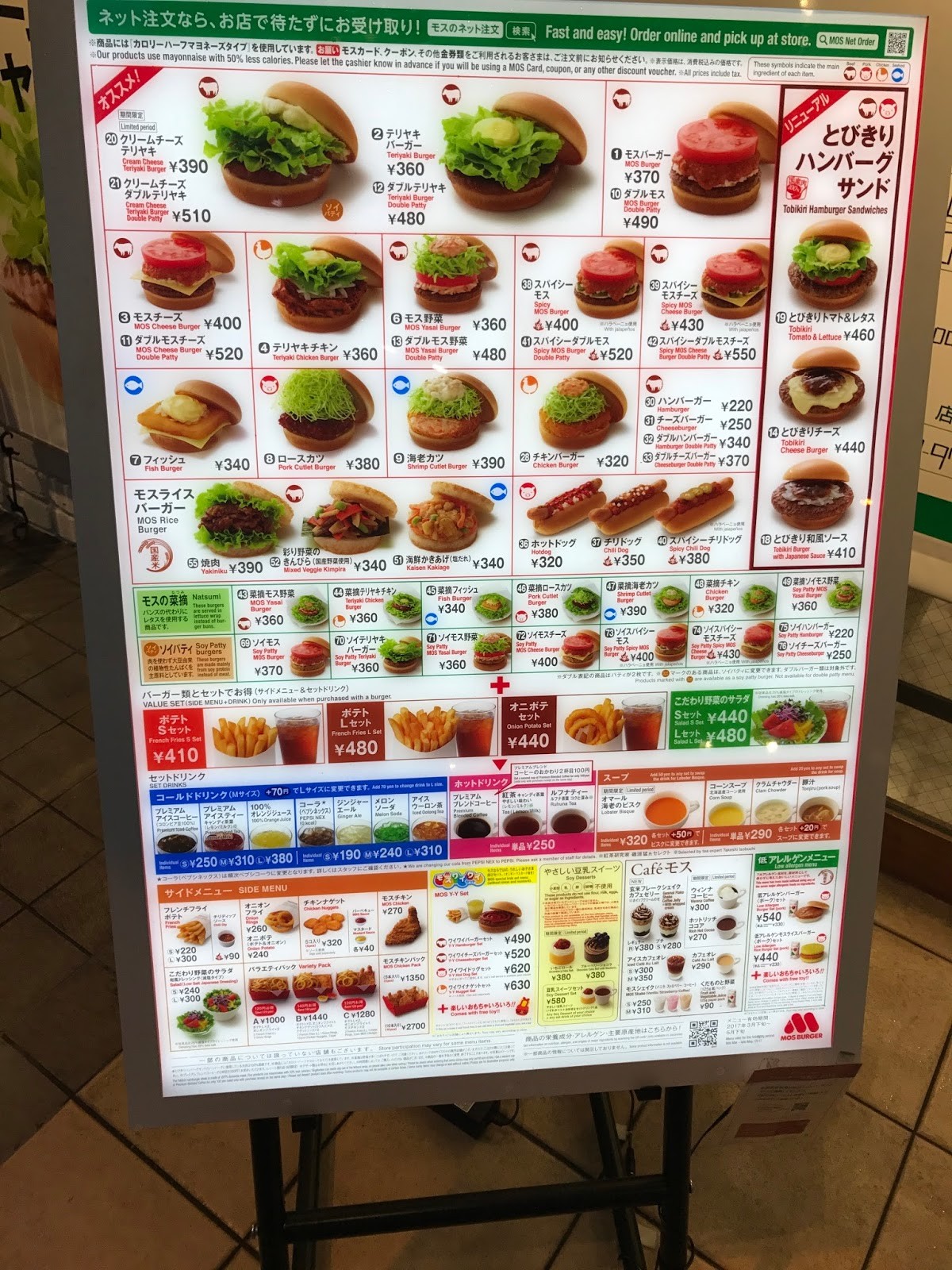
    The funny part about food photography is that the methodology is largely regional. For example, Japanese audiences largely expect a burger photo to have the bun sliding off of the burger, like so:

    Originally it was done to prevent the bun from obscuring any of the ingredients. But now it is a sort of cultural thing, where lots of menus do it simply because that’s what the other menus do. But it also means that Japanese burger photography is done using different materials and methods than western burger photography. But to use the second image as an example, that runny egg yolk on the right burger is probably some sort of inedible yellow paint. Because the photographer wants controllable color and consistency, and cooking is rarely consistent enough for that. The glaze on the meat is probably some kind of clear-coat rosin or spray. The egg was probably cooked hard and then sliced with a scalpel to create that perfect wedge slice for the yellow paint to be added. Etc…


  • A few reasons.

    First is testing the response times, locations, scale, etc… If you intentionally violate air space, you can measure how long it takes for your future opponent to scramble their own response. You can see what kind of equipment they send to respond. You can see where the response comes from. You can see how many combatants they send to respond. That is all valuable info if you’re planning potential attacks in the future.

    Second is creating a “boy who cried wolf” situation. Repeatedly violate their airspace, and they’ll begin to see the violations as routine. They’ll stop treating them as genuine threats, and will simply start treating them as just another annoyance. None of the violations ever result in an attack, so why would this one be any different? Then when the actual attack comes, your opponent is caught with their pants down because they weren’t fully responsive.

    Third is money. In the grand scheme of things, flying a single drone around is a drop in the bucket. In contrast, a sudden scrambled response costs a lot. It’s a lot of sudden manpower and logistics to coordinate. Especially when the violation turns out to be a nothing-burger. If you want to begin straining your opponent before a war even begins, make them start counting pennies before you attack.

    Fourth, it could be posturing. Look at how weak our enemy is! They can’t even patrol their own border. They’re afraid of us and let us into their airspace. Etc…

    Fifth could be intimidation. Remind them that they’re within poking distance. Especially since they’de supporting Ukraine. Want to discourage that support? Encourage them to circle the wagons and bring their support home instead.


  • The TL;DR is that gold prices spiking is a major sign that people are completely losing faith in the dollar, and are attempting to buy assets that will hold value better. People expect major inflation, and are attempting to buy gold (which will hopefully hold its value) instead of keeping all of their funds as dollars (which will lose value when inflation happens). But this sudden surge in gold demand has caused the recent price of gold to drastically spike.


  • I mean, would you want it to serve clients outside of your subnet? I guess maybe if you had something like a guest network. But I tend to take the “fuck it, you get basic service and nothing else” approach to things like guest networks.

    Isn’t it a potential security issue to have your pihole serve things on any subnet, because it allows an improperly configured firewall to stab at your pihole? I think you can specify any additional subnets it will serve in the settings somewhere. But IIRC, the default behavior is to intentionally drop traffic from unknown subnets. But that’s just off the top of my head.


  • I currently believe that reasonable doubt exists. And since “beyond a reasonable doubt” is the standard for a guilty sentence, I would currently vote Not Guilty if I were sitting on the jury.

    “Beyond a reasonable doubt” is meant to be a very large barrier. It’s not “maybe”. It’s not “probably”. It’s not even “I personally think he did it, but I understand how people could think otherwise.” It’s “a reasonable person would have zero doubt that he did it.” Beyond a reasonable person’s ability to doubt. And since that doubt still exists, (due to the bungled investigation, laughably inept police work, him not looking like the shooter in the security footage, etc) he would be not guilty in my eyes. Because a reasonable person would be able to find ways to doubt his guilt.


  • The overwhelming amount of evidence was actually a large part of why I consistently held that some of it was planted. His bag was initially searched at the scene of the arrest, then it was taken by an officer who wasn’t wearing a body cam. The bag was entirely off camera for around 10 minutes. Then when that officer came back with the bag, they searched it again and “found” the journal, manifesto, ghost gun, etc… None of which was noted during their initial search inside of the restaurant.

    The police were under an extreme amount of pressure to arrest somebody. Anybody. They needed a patsy. And so my bet right from the start had always been that the evidence was planted.

    You’re telling me the dude managed to evade a nationwide manhunt for an entire week, but didn’t think to break up the untraceable ghost gun? It could have been taken apart and scattered into a dozen trash cans, and they never would have found it.

    And when people write manifestos, it’s because they expect to get caught and they want their manifesto to be seen. They want to send a specific message. So why would he hide for an entire week if he wanted the manifesto to be found?

    The eyebrows don’t match either. Luigi’s were much bigger than the security camera footage of the killer. And anyone who has accidentally over-plucked their eyebrows can attest that they don’t just grow back in a week.


  • The Fifth Amendment of the United States Constitution, emphasis mine:

    No person shall be held to answer for a capital, or otherwise infamous crime, unless on a presentment or indictment of a Grand Jury, except in cases arising in the land or naval forces, or in the Militia, when in actual service in time of war or public danger; nor shall any person be subject for the same offense to be twice put in jeopardy of life or limb; nor shall be compelled in any criminal case to be a witness against himself, nor be deprived of life, liberty, or property, without due process of law; nor shall private property be taken for public use, without just compensation.

    Double jeopardy is a legal concept that means a person can’t be tried for the same crime twice. Leading up to the revolution, there was an issue with British authorities charging colonists with trumped up charges just to harass them. And when they’d beat the charges, the authorities would just charge them with the same crime again, starting the entire process all over again. So they specifically listed a “no double jeopardy” clause in the constitution, because they had seen how a prosecutor could abuse the legal system to keep an innocent person perpetually locked up.

    However, double jeopardy doesn’t typically protect someone across state and federal crimes. Courts have repeatedly upheld that you can be tried in both, because the two courts are entirely separate. So it’s interesting that they’re trying to use the double jeopardy argument to say that the state can’t charge him.


  • I’m somewhere in the middle, because comments like yours actually reinforce my concerns. A reverse proxy isn’t really doing anything to make you more secure, unless you’re using it for some sort of access control. It hides which ports you’re using, and allows you to encrypt your traffic with TLS… But it doesn’t add any additional security to the services you are exposing.

    Maybe if you use it for access control, to add a secondary username/password to the services. But that breaks most legitimate things (apps, mostly) that try to reach the double-password-protected service. Because a user on a web browser may be able to type in two passwords, (one for the reverse proxy, and then one for the service itself) but an app will try to pass that info automatically using headers.

    Any vulnerabilities in the services will still become potential attack vectors. Anyone who remembers the Huntarr debacle will know exactly what I’m talking about, because a single service being vulnerable can do a lot of damage. Yes, containerization does a lot to help mitigate damage by excluding access to everything except what you give it. But it won’t completely stop things from going wrong.